
Correction!!!
 Merlin L. Marquard

A couple weeks ago, I came across a whole group of compounds entirely new to and overlooked by me with regard to cancer and general enquiry. To put it more precisely, my dad put me across a whole group of such compounds with a simple question:
What do you think about turkey tail mushroom extract?
I had no answer, absolutely none, and dad expounded upon his question. He'd watched a conversation video, where one of the guests had had a dog with cancer. For the dog, turkey tail mushroom extract apparently did the trick and the cancer regressed into undetectability.
I was skeptical, but what else could I do than to look into such great promise? There was a dramatic therapeutic gap in our Mosaic Method, which hadn't become obvious to us before. The Mosaic Method was incredibly good at addressing the metabolic axis of cancer, but lacked tools to combat the evolutionary adaptations of cancer. This was an oversight, that should have been resolved far earlier, as cancer is most simply conceptualised as a disease of inverted evolution, where the affected cells lose multicellularity.1
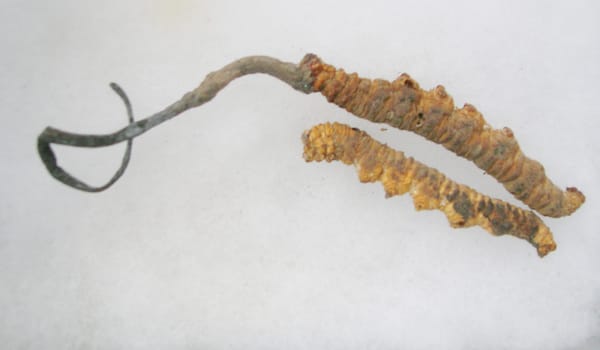
I've already written about the first mushroom I looked into in a prior article.2 The mushroom I chose first was somewhat arbitrarily Ganoderma lucidum (also: Reishi, Lingzhi). It was a good choice, though, as there's a large amount of research on it. In my reading up on Reishi, I saw it combined with the mushroom Cordyceps sinensis quite a few times. So, instead of looking at turkey tail mushroom, which sparked this whole enquiry, I got sucked into the research on the anticancer effects and efficacy of C. sinensis, though I will eventually look into turkey tail mushroom and its therapeutic potential.
As a small aside, I will refer to the Chinese cordyceps mushrooms exclusively by the name C. sinensis, even when the study, whence the respective information has been drawn, uses its alternative name Ophiocordyceps sinensis.
What Cordyceps Sinensis and Company Can Do
Before we get into the details of pharmacology, toxicology, and synergism with other pharmaceuticals, I want to show you why you'll probably want to care about any of that by looking at the direct anticancer effects of C. sinensis, as well as the distantly related C. militaris for various cancers.
Cordycepin – a component of various Cordyceps mushrooms – lowered cancer cell migration and invasion in bladder cancer and prostate cancer.3 It increased apoptosis – a sacrificial cell suicide – in breast cancer, cervical cancer, gastric cancer, myeloma, and testicular cancer. It inhibit cell cycle transitions (which slows growth) in cervical cancer, colon cancer, and testicular cancer and slowed growth in melanoma.
Polysaccharides from C. sinensis increased apoptosis in colon cancer, and C. sinensis extract did the same in lung cancer.3 C. militaris extract also increased apoptosis in breast cancer and lung cancer, inhibited cell cycle transitions in colorectal cancer and lung cancer, and tumour growth, invasion, and metastasis in liver cancer.
I think this shows how interesting C. sinensis is as a prospect pharmaceutical for cancer treatment.
Oh, and on top of this Cordyceps extracts modulate immune function and improve cytotoxic (toxic to cells) recruitment and efficacy against cancer cells, which allows for the immune system to better kill defective cells by putting it into a more vigilant state.3
We publish new articles, whenever we've synthesised new findings to a usable degree. You can subscribe to receive articles for free.
Pharmacological Effects
We come now to a bit of the more scientifically interesting section. Understanding the pharmacological effects of the various components of Cordyceps mushrooms and their mechanisms of action can indeed enable us to hypothesis feasible synergisms they may exhibit with other pharmaceuticals, which in turn can significantly shorten our search for such synergistic pharmaceuticals, as we won't be flying blind. We'll focus on effects here and then discuss mechanisms of action and synergism later.
Cordyceps Improves Anticancer Immune Responses
We've previously discussed the importance of the tumour microenvironment both for anticancer immune response and extracellular tumour auto-signalling.4 Prior research and the fact, that immune cells show highly varied behaviour in response to different microenvironmental contexts, indicate C. sinensis may modulate cancer immunity by modifying microenvironmental cues to the immune system.3
In fact, C. sinensis increases the pro-inflammatory phenotype (cell shape and behaviour), reverses immunosuppressive phenotypes to pro-inflammatory ones, and delays the development of a suppressive phenotype of T-cells (the primary type of immune cell tasked with the destruction of infected and defective cells).3
Furthermore, C. sinensis is able to change macrophage phenotype. Macrophages exist primarily in two phenotypes: M1 and M2, whereby the former is immunostimulative and phagocytotic (cellular behaviour of engulfing extracellular debris or other cells), whilst the latter is immunosuppressive and stimulates remodelling of the extracellular matrix (a kind of extracellular scaffolding).5 C. sinensis inverts M2 macrophage polarisation, turning them into the M1 phenotype exhibiting anticancer activity.3 This is incredibly powerful especially because M2 macrophages make up a large part of solid tumour biomass, being mixed in with the cancer cells themselves, and act as immune suppressors in the tumour microenvironment. This makes C. sinensis a promising tool against this highly manipulative attribute of cancer tumours.
Beyond having these incredibly useful indirect anticancer effects through immune modulation, Cordyceps also exhibits direct inhibitory effects on cancer cell growth and survival, as stated before.
Cordyceps Modulates Apoptotic Signalling, Autophagy, and Cell Cycle
Apoptosis is a kind of sacrificial cell suicide, that's essential to maintain growth balance in complex organisms and thus preserve tissue shape, size, and function in relation to the whole organism. The disruption of this balance leads to tumours.6
Cordycepin increased expression levels of DR3 and various caspases, all of which are involved in initiating and executing the process of apoptosis.3 It also increased expression of Fas, a kind of receptor for a T-cell-initiated death signal,7 and thus aids in immune system–mediated killing of cancer cells. Cordycepin also lowered the expression of anti-apoptotic Bcl-2 and increased the expression of the pro-apoptotic Bax, thus enabling easier mitochondrial apoptosis.8
Both Cordycepin and a polysaccharide (molecule comprised of a long chain of sugars) from C. sinensis has been found to induce autophagy in cancer cells and by extension autophagic cell death, both of which I think are valuable to us, the former because it helps improve repair of damaged structures in cancer cell and the latter because it kills the cancer cell when the former is ineffectual. We've written about autophagy and the positive outcomes of repairing essential cellular structure in cancer prior.9
Another interesting direct action exhibited by cordycepin is the arrest of cell cycle, which exhibits checkpoints at G1, S, and G2/M phases. Cordycepin blocked G2/M cell cycle phase transitions, which disallows mitosis (classical cell division) and increased number of subG1 whilst decreasing number and viability of cells in G1 and G2/M by increasing expression of multiple caspases (remember: proteins involved in the initiation and execution of apoptosis). Cordycepin was also shown to inhibit RNA synthesis, which results in slower production of proteins and thus slower cell division.10
Cordyceps Inhibits Migration, Invasion, and Metastasis
The epithelial-mesenchymal transition has long been considered essential to the formation of metastases, but new data seems to indicate, that even transient and incomplete transition is sufficient at least in some cancers.11 This finding was at first confusing to me, as epithelial cell need certain survival signals to prevent their apoptosis12. A fully epithelial cancer cell thus simply can't survive unicellular metastasis.
To me this opened up two obvious explanatory avenues. On one hand, we could have a non-mesenchymal transition of these epithelium-derived cancer cells – for example a transition toward a myeloid cell type. On the other hand, we could have a multicellular metastasis, where the metastasising cancer cells don't enter blood as single cells, but as clusters of cells providing sufficient survival signals to one another.
Fascinatingly, upon perusing the literature, I quickly found that both has been observed in research. In fact, clusters of cancer cells exhibited far greater metastatic success than single cancer cells in a mouse model, even though there were far fewer clusters than single cells in the blood, and in humans, a greater number of circulating clusters predicts worse patient outcomes.13
Cancer cells also exhibit highly myeloid (cells from the bone marrow, which don't mature in the lymphatic organs) characteristics, like the expression of inflammatory cytokines – like the expression of IL-6 by mesotheliomata and other lung cancers.14-5 In fact, the point has been made in research, that the cancer cells are better to be described by the result of a pathological epithelial-myeloid transition.16-7 The Warburg effect itself may in fact derive from this myeloid behaviour, as activated myeloid cells do readily utilise lactic acid fermentation for energy generation. Even migration and metastasis may be described by such an epithelial-myeloid transition over or as an alternative to the epithelial-mesenchymal transition. Even, the migratory patterns of cancer cells – preferentially toward bone and lymphatic organs – are the same as those of activated myeloid cells.
I will most likely write more on the prospect of the epithelial-myeloid transition in cancer and its implications for cancer patients, but for now, let's get back to the discussion of Cordyceps.
Cordycepin inhibits the expression of matrix metalloproteinase 9 (MMP-9) and a polysaccharide isolated from C. sinensis lowered expression of MMP-1, MMPs being used by myeloid cells, like M2 macrophages to remodel the extracellular matrix, which in turn supports invasion and metastasis.3,5,18 This means, that whether metastasis be explained by epithelial-mesenchymal or epithelial-myeloid transition, C. sinensis can inhibit metastasis. Furthermore, a polysaccharide isolated from C. sinensis was able to down-regulate VEGF, c-Myc, and c-Fos, which in turn inhibits tumour growth and progression.
We don't take sponsoring or display advertisements in order to keep us free from conflicts of interest. If you've found this valuable, you can help us by supporting our fight against cancer financially.
Mechanisms of Action and Synergism with Other Anti-Cancer Pharmaceuticals
In all of its indirect immunomodulatory actions, C. sinensis acts primarily by changing the expression profile of various inflammatory cytokines (academic greek for 'cell mover' as they influence cell behaviour). It increases interleukins 1beta, 6, and 12 (IL-1beta, IL-6, IL-12), tumour necrosis factor alpha (TNF-alpha), interferon gamma (IFN-gamma), and nitric oxide (NO) production, whilst decreasing presentation of mannose and scavenging receptors and production of IL-10.3
Why's this interesting?
Well, chronic increase in IL-6 can lead to immune senescence and is indeed one of the ways in which lung cancers and mesotheliomata will instantiate immune evasion.13–4 In fact, increased IL-6 has been seen in various cancer and has been associated with worse outcomes for cancer patients.19–20 Interestingly, we've previously written about another mushroom, that counteracts IL-6 signalling.21 There are, however, other ways, in which we can ameliorate this unwanted effect of Cordyceps. Capsaicin – the compound making chilis spicy – also suppresses IL-6 signalling – amongst a whole lot of other anticancer activity – as does a healthy supply of omega-3 fatty acids.22-3
Such combination of various pharmaceuticals to arrive at a desired modulation of various signalling pathways in patients has only recently experienced an upwind in the literature. The reasons for this are probably manifold, but have to do with the nonpatentability of natural compounds and the relative difficulty of understanding the crosstalk between various compounds, which could lead to heightened toxicity or to increased therapeutic efficacy or both.
In my estimation, this doesn't mean we shouldn't try to understand such crosstalk as the synergism, that can arise from it, can indeed be the difference between life and death for the affected cancer patients, when mono-drug therapy turns out to be inept at halting disease progression. In fact, it's precisely this weakness of mono-drug (and by extension mono-intervention) therapies, that has led us at Marchward to develop and continue to expand the Mosaic Method, which is based on a plethora of synergistic interventions, which each in themselves typically show therapeutic penetrance in less than half of the population.9
Sadly, there's not much else to say about synergism between C. sinensis and other anticancer pharmaceuticals, simply because clinical studies are lacking and mechanistic synergy doesn't always necessitate actual synergic effect, just as mechanistic dysergy doesn't always necessitate actual dysergic effect. As the scientific research progresses, I'll write again on this topic of synergy, but the field is vast and scarcely charted.
Clinical Data, Toxicology, and Effective Dosing
Now, with all the positive effects of C. sinensis and other Cordyceps mushrooms for cancer patients, it's important to remember, that such promising pharmaceuticals may be clinically inefficient, toxic, or not bioavailable enough to allow for effective dosing in humans. So, we'll take a look at all three concerns and see, if this promising pharmaceutical is indeed useful.
Uni-adjuvant therapy with C. sinensis has shown efficacy in clinical trials at 6 g/d in improving tumour response rate, immune function, patient quality of life, and reducing adverse effects of classical treatments like chemo- or radiotherapy.24 I think it likely that no clear effect is shown below 6 g/d for C. sinensis due to nonexistent combinatory treatments with G. lucidum, ketogenic diet, alkalisation therapy, or similar, all of which have been shown to improve cancer patient outcomes as discussed in prior articles,9,25–6 though this is impossible to ascertain without more solid data. Nonetheless, C. sinensis does show efficacy in improving outcomes in human patients.
With regard to toxicity, C. sinensis has been used safely in humans for hundreds of years and recent experiments in mice showed no toxicity at doses of 2 g/kg of methanolic C. sinensis fruiting body extract.27 Wild C. sinensis does also contain arsenic in moderate amounts and has thus been supposed to be toxic due to its arsenic content. This hypothesis was discarded by data of a study in mice showing no difference between C. sinensis–treated groups to control groups.28 This is an especially important result, because treatment of mice with inorganic arsenic at the same amount as was included in the C. sinensis treatment showed significant toxicity, thus showing, that specifically the organic arsenic in C. sinensis doesn't exhibit toxicity.
With regard to effective dosing, beneficial effects of C. sinensis have been clinically established at 6 g/d, though I would presume using it in combination with other adjuvant treatments à la the Mosaic Method would indeed lower its minimum effective dose. If you want to ensure therapeutic efficacy, 6 g/d seems safe given the data, though there is the problem, that I linguistically only have access to the review article, not so the original articles, as these are written in Mandarin. I thus have no data on the extraction coefficient of the C. sinensis extracts used, though extraction at coefficients between 3:1 and 10:1 is common.
Due to murkiness of data and the co-administrative use of C. sinensis in the Mosaic Method, I tend to recommend doses of 2 to 3 g/day of 10:1 extract. Keep in mind, however, that this is decidedly not medical advice, as clinical data is incomplete.
Closing Remarks
If we go back to how all of this began, I think it quite amazing how much can come from a simple question. I likewise think it essential for professionals such as doctors, molecular biologists, and all other kinds of 'experts' to stay far away from what I call professional arrogance.
On multiple occasions now, I've been rewarded with enormous strides in my understanding of cancer and of how to treat the wicked disease, that it's an entirely disproportionate reward for showing and enacting humility, professional and otherwise.
Had I been given to professional arrogance, I'd never have looked into the use of sodium bicarbonate in cancer treatment – which gave rise to my discovery of the safe and highly effective alkalisation therapy26 –, into the benefits of hydrogenated water, or – as important for this article – into the merits of using medicinal mushrooms against cancer.
To think this article and my continued search for medicinal mushrooms exhibiting anticancer action started with dad's question: 'What do you think about turkey tail mushroom extract?' and a bit of humility...
I hope this has been an entertaining and informative read.
God bless,
Merlin L. Marquard.
References
- Alfarouk KO, Shayoub MEA, Muddathir AK, Elhassan GO, Bashir AHH. Evolution of Tumor Metabolism might Reflect Carcinogenesis as a Reverse Evolution process (Dismantling of Multicellularity). Cancers. 2011;3(3):3002–17.
- Leonhard Marquard M. On Ganoderma Mushrooms and Cancer Immunotherapy [Internet]. Marchward. 2025 [cited 2025 Oct 3]. Available from: https://www.marchward.com/on-ganoderma-mushrooms-and-cancer-immunotherapy/
- Liu Y, Guo ZJ, Zhou XW. Chinese Cordyceps: Bioactive Components, Antitumor Effects and Underlying Mechanism—A Review. Molecules. 2022 Oct 4;27(19):6576.
- Leohnard Marquard M. Helping Cancer Heal through pH Neutralisation [Internet]. Marchward. 2025 [cited 2025 Oct 5]. Available from: https://www.marchward.com/helping-cancer-heal-through-ph-neutralisation/
- ŽALOUDÍKOVÁ M. Mechanisms and Effects of Macrophage Polarization and Its Specifics in Pulmonary Environment. Physiol Res. 2023 July 31;72(Suppl 2):S137–56.
- Alberts B, Johnson A, Lewis J, Morgan D, Raff M, Roberts K, et al. Cancer. In: Molecular Biology of the Cell. 6th edn New York, US: Garland Science, Taylor & Francis Group, LLC; 2015.; p. 1091–144.
- Alberts B, Johnson A, Lewis J, Morgan D, Raff M, Roberts K, et al. Cell Death. In: Molecular Biology of the Cell. 6th edn New York, US: Garland Science, Taylor & Francis Group, LLC; 2015.; p. 1021–34.
- Czabotar PE, Garcia-Saez AJ. Mechanisms of BCL-2 family proteins in mitochondrial apoptosis. Nature Reviews Molecular Cell Biology. 2023 Oct 1;24(10):732–48.
- Leonhard Marquard M, Leonhard Marquard C. The Mosaic Method [Internet]. Marchward. 2025 [cited 2025 Sept 29]. Available from: https://www.marchward.com/mosaic/
- Alberts B, Johnson A, Lewis J, Morgan D, Raff M, Roberts K, et al. How Cells Read the Genome: From DNA to Protein. In: Molecular Biology of the Cell. 6th edn New York, US: Garland Science, Taylor & Francis Group, LLC; 2015.; p. 299–368.
- Gao D, Mittal V, Ban Y, Lourenco AR, Yomtoubian S, Lee S. Metastatic tumor cells - genotypes and phenotypes. Front Biol (Beijing). 2018 Aug;13(4):277–86.
- Muranen T, Iwanicki MP, Curry NL, Hwang J, DuBois CD, Coloff JL, et al. Starved epithelial cells uptake extracellular matrix for survival. Nat Commun. 2017 Jan 10;8(1):13989.
- Wrenn E, Huang Y, Cheung K. Collective metastasis: coordinating the multicellular voyage. Clin Exp Metastasis. 2021 Aug;38(4):373–99.
- Abdul Rahim SN, Ho GY, Coward JIG. The role of interleukin-6 in malignant mesothelioma. Transl Lung Cancer Res. 2015 Feb;4(1):55–66.
- Chen C, Chen J, Zhang Y, Zhang Q, Shi H. Senescence-associated secretory phenotype in lung cancer: remodeling the tumor microenvironment for metastasis and immune suppression. Front Oncol. 2025 May 29;15:1605085.
- Schramm HM. The Epithelial-Myeloid-Transition (EMyeT) of cancer cells as a wrongly perceived primary inflammatory process eventually progressing to a bone remodeling malignancy: the alternative pathway for Epithelial- Mesenchymal-Transition hypothesis (EMT)? J Cancer. 2019 June 9;10(16):3798–809.
- Schramm HM. Should EMT of Cancer Cells Be Understood as Epithelial-Myeloid Transition? Journal of Cancer. 2014 Jan 15;5(2):125–32.
- Thuya WL, Cao Y, Ho PCL, Wong ALA, Wang L, Zhou J, et al. Insights into IL-6/JAK/STAT3 signaling in the tumor microenvironment: Implications for cancer therapy. Cytokine & Growth Factor Reviews. 2025 Jan 17.
- Tsukamoto H, Fujieda K, Senju S, Ikeda T, Oshiumi H, Nishimura Y. Immune‐suppressive effects of interleukin‐6 on T‐cell‐mediated anti‐tumor immunity. Cancer Sci. 2018 Mar;109(3):523–30.
- Thuya WL, Cao Y, Ho PCL, Wong ALA, Wang L, Zhou J, et al. Insights into IL-6/JAK/STAT3 signaling in the tumor microenvironment: Implications for cancer therapy. Cytokine & Growth Factor Reviews. 2025 Jan 17.
- Leonhard Marquard M. On Ganoderma Mushrooms and Cancer Immunotherapy [Internet]. Marchward. 2025 [cited 2025 Oct 3]. Available from: https://www.marchward.com/on-ganoderma-mushrooms-and-cancer-immunotherapy/
- Trebble T, Arden NK, Stroud MA, Wootton SA, Burdge GC, Miles EA, et al. Inhibition of tumour necrosis factor-α and interleukin 6 production by mononuclear cells following dietary fish-oil supplementation in healthy men and response to antioxidant co-supplementation. British Journal of Nutrition. 2003;90(2):405–12.
- Adetunji TL, Olawale F, Olisah C, Adetunji AE, Aremu AO. Capsaicin: A Two-Decade Systematic Review of Global Research Output and Recent Advances Against Human Cancer. Front Oncol [Internet]. 2022 July 13 [cited 2025 Oct 6];12. Available from: https://www.frontiersin.org/journals/oncology/articles/10.3389/fonc.2022.908487/full
- Wang C, Wang J, Qi Y. Adjuvant treatment with Cordyceps sinensis for lung cancer: A systematic review and meta-analysis of randomized controlled trials. Journal of Ethnopharmacology. 2024 June 12;327:118044.
- Leonhard Marquard M. On Ganoderma Mushrooms and Cancer Immunotherapy [Internet]. Marchward. 2025 [cited 2025 Oct 3]. Available from: https://www.marchward.com/on-ganoderma-mushrooms-and-cancer-immunotherapy/
- Leohnard Marquard M. Helping Cancer Heal through pH Neutralisation [Internet]. Marchward. 2025 [cited 2025 Oct 5]. Available from: https://www.marchward.com/helping-cancer-heal-through-ph-neutralisation/
- Dutta D, Singh NS, Verma AK. Genotoxicity, acute and sub-acute toxicity profiles of methanolic Cordyceps militaris (L.) Fr. extract in Swiss Albino Mice. Journal of Ethnopharmacology. 2024 Dec 5;335:118603.
- Gao L, Yang H, Ma J, Bi H, Xiao Y, Li C, et al. Wild Cordyceps sinensis exhibits far lower arsenic accumulation and hepatorenal in mice compared to equivalent dose of inorganic arsenic. Front Pharmacol [Internet]. 2025 June 24 [cited 2025 Oct 7];16. Available from: https://www.frontiersin.org/journals/pharmacology/articles/10.3389/fphar.2025.1625045/full