Bless!
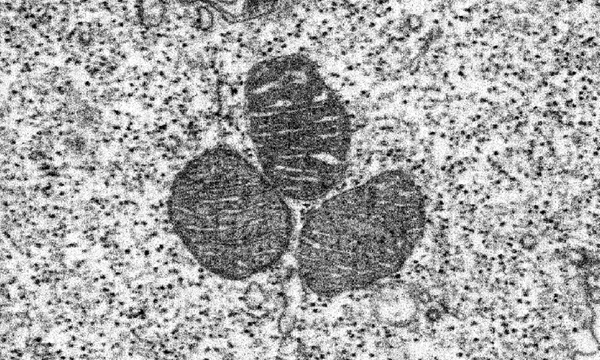
The one task mitochondria are most well-known for is indubitably the generation of biologically useful energy in the form of the biological energy carrier ATP (short for adenosine triphosphate, a biological energy carrier used by our cells as a kind of energy credit).1–2
Interestingly, they aren’t alone within our cells in their ability to generate ATP – the general interior of the cell can do that as well –, but they are alone within our cells in their ability to use oxygen to burn fuel completely in a highly fuel- and waste-efficient process known as cellular respiration.
Cancer cells have multiple problems with using cellular respiration for energy production:
- The interiors of cancerous tumours are exceedingly hypoxic (a biological state of suboptimal oxygen concentrations), which is somewhat counter-productive to using oxygen to completely burn fuel.3
- Using cellular respiration instead of the fermentation of sugar exposes the cancer cell to a higher risk of apoptosis (a tightly regulated process of sacrificial cell suicide invoked in many different contexts), as both of these metabolic pathways suppress said apoptosis.4
- Blocking the fermentation of sugar – which would consequently necessitate other means of ATP (biological energy credit) generation, like cellular respiration – has been found to decrease the overall growth rate of tumours across various cancer subtypes.5
Conversely, this means for us, that reorienting cancer metabolism can indeed be a potent tool in curtailing multiple hallmarks of cancer, such as the high growth rate of their cells and their resistance to apoptosis.
Hypoxia drives multiple adaptations in cancer cells, which suppress the immune system’s anti-cancer activity, improve tumour growth, promote cancer progression, and engender treatment resistance.6–7 Interestingly, correcting hypoxia by the improvement of blood supply into tumours or by use of hyperbaric oxygen has been found to ameliorate some of these negative effects of hypoxia, presumably by simply alleviating said hypoxia.8–9
As stated above, the fermentation of sugar improves cancer cell resistance to the sacrificial cell suicide known as apoptosis, but there are other things, which happen downstream of sugar fermentation by cancer cells.
The waste product of sugar fermentation is lactic acid, which is acid and not easily cleared from tissues.10 The acidosis (a biological state of being superoptimally acidic; being in the state of acidosis), which the overuse of sugar fermentation by cancer cells causes, destabilised the genome of the cancer cells, thus drastically increasing their mutation rates.11–12 This is bad, because a higher mutation rate gives rise to swifter adaptation to adverse pressures, such as treatment, which in turn improves the ability of cancer cells to develop countermeasures against treatments.
The behaviour of many cancer cells to use sugar fermentation irrespective of oxygen status is termed the Warburg effect.13 This behaviour isn’t universal across cancer cell populations. In fact, the very acidoses generated by the implicit fermentation of the Warburg effect allows cancer cells to reprogramme their metabolism in such a way as to rely less upon sugar and be able to grow more and more swiftly.14
Furthermore, this acidosis also suppresses the activity of natural killer cells and T cells (immune cells tasked with the destruction of infected and defective cells, such as cancer cells) and rewires regulatory immune cells in such a way, that they begin to actively support tumour growth and suppress their cancer-killing immune cell brethren.15–16 And as though that wasn’t bad enough already, tumour acidosis also improves the adaptability of affected cancer cells, rewires their metabolism for higher flexibility, and drives their invasion into surrounding healthy tissue.17–19
Now, remember all of these points – hypoxia, acidosis, and fuel sources – interact in various complex ways with cancer and immune cell behaviours and resolving the states of hypoxia and acidosis, as well as changing the fuel sources cancer cells are allowed to use can have enormous benefits.
How to target cancer cell metabolism successfully is an entirely different can of worms, and can impossibly be discussed here at anything approaching appropriate depth. If these things interest you, I should like to direct you toward articles we've already written on this matter and adjacent topics.
Namely, I'd directly you toward this article on alkalisation, this article on cancer cell starvation, and this article on the mitochondrial toxicity of SARS-CoV-2 spike protein and how to get rid of it.
For now, just know, that the aberrant energy metabolism of cancer cells has catastrophic consequences, and that we need to deal with that, if we want to see success in the treatment of patients with late-stage cancers.
God bless,
Merlin L. Marquard
References
- Alberts B, Johnson A, Lewis J, et al. Cell Chemistry and Bioenergetics. In: Molecular Biology of the Cell. New York, US: Garland Science, Taylor & Francis Group, LLC 2015. 43–108.
- Alberts B, Johnson A, Lewis J, et al. Energy Conversion: Mitochondria and Chloroplasts. In: Molecular Biology of the Cell. New York, US: Garland Science, Taylor & Francis Group, LLC 2015. 753–812.
- Muz B, Puente P de la, Azab F, et al. The role of hypoxia in cancer progression, angiogenesis, metastasis, and resistance to therapy. HP 2015;3:83–92. doi:10.2147/HP.S93413
- Andersen JL, Kornbluth S. The Tangled Circuitry of Metabolism and Apoptosis. Molecular Cell 2013;49:399–410. doi:10.1016/j.molcel.2012.12.026
- Lam S-K, Yan S, Lam JS-M, et al. Disturbance of the Warburg effect by dichloroacetate and niclosamide suppresses the growth of different sub-types of malignant pleural mesothelioma in vitro and in vivo. Frontiers in Pharmacology 2022;13. doi:10.3389/fphar.2022.1020343
- Li Y, Patel SP, Roszik J, et al. Hypoxia-Driven Immunosuppressive Metabolites in the Tumor Microenvironment: New Approaches for Combinational Immunotherapy. doi:10.3389/fimmu.2018.01591
- Muz B, Puente P de la, Azab F, et al. The role of hypoxia in cancer progression, angiogenesis, metastasis, and resistance to therapy. HP 2015;3:83–92. doi:10.2147/HP.S93413
- Chen S-Y, Tsuneyama K, Yen M-H, et al. Hyperbaric oxygen suppressed tumor progression through the improvement of tumor hypoxia and induction of tumor apoptosis in A549-cell-transferred lung cancer. Sci Rep2021;11:12033. doi:10.1038/s41598-021-91454-2
- Jain RK. Antiangiogenesis Strategies Revisited: From Starving Tumors to Alleviating Hypoxia. Cancer Cell2014;26:605–22. doi:10.1016/j.ccell.2014.10.006
- Alberts B, Johnson A, Lewis J, et al. Cell Chemistry and Bioenergetics. In: Molecular Biology of the Cell. New York, US: Garland Science, Taylor & Francis Group, LLC 2015. 43–108.
- Dai C, Sun F, Zhu C, et al. Tumor Environmental Factors Glucose Deprivation and Lactic Acidosis Induce Mitotic Chromosomal Instability – An Implication in Aneuploid Human Tumors. PLOS ONE 2013;8:e63054. doi:10.1371/journal.pone.0063054
- Tan Z, Chu DZV, Chan YJA, et al. Mammalian Cells Undergo Endoreduplication in Response to Lactic Acidosis. Sci Rep 2018;8:2890. doi:10.1038/s41598-018-20186-7
- Potter M, Newport E, Morten KJ. The Warburg effect: 80 years on. Biochem Soc Trans 2016;44:1499–505. doi:10.1042/bst20160094
- Rolver MG, Holland LKK, Ponniah M, et al. Chronic acidosis rewires cancer cell metabolism through PPARα signaling. International Journal of Cancer 2023;152:1668–84. doi:https://doi.org/10.1002/ijc.34404
- Christiansen FB, Novella ES, Lindemann AV, et al. T Cell Dysfunction in the Acidic Tumor Microenvironment. Acta Physiologica 2026;242:e70260. doi:10.1111/apha.70260
- Huber V, Camisaschi C, Berzi A, et al. Cancer acidity: An ultimate frontier of tumor immune escape and a novel target of immunomodulation. Seminars in Cancer Biology 2017;43:74–89. doi:10.1016/j.semcancer.2017.03.001
- Estrella V, Chen T, Lloyd M, et al. Acidity Generated by the Tumor Microenvironment Drives Local Invasion. Cancer Research 2013;73:1524–35. doi:10.1158/0008-5472.Can-12-2796
- Rastogi S, Mishra SS, Arora MK, et al. Lactate acidosis and simultaneous recruitment of TGF-β leads to alter plasticity of hypoxic cancer cells in tumor microenvironment. Pharmacology & Therapeutics 2023;250:108519. doi:https://doi.org/10.1016/j.pharmthera.2023.108519
- Rolver MG, Holland LKK, Ponniah M, et al. Chronic acidosis rewires cancer cell metabolism through PPARα signaling. International Journal of Cancer 2023;152:1668–84. doi:https://doi.org/10.1002/ijc.34404